
Gorilla Habituation vs. Gorilla Trekking in Uganda
One hour or four? Uganda's gorilla trekking and habituation experiences offer very different encounters with mountain gorillas. Here's how they compare on time, price, group size, and conservation impact and how to decide which is right for you.
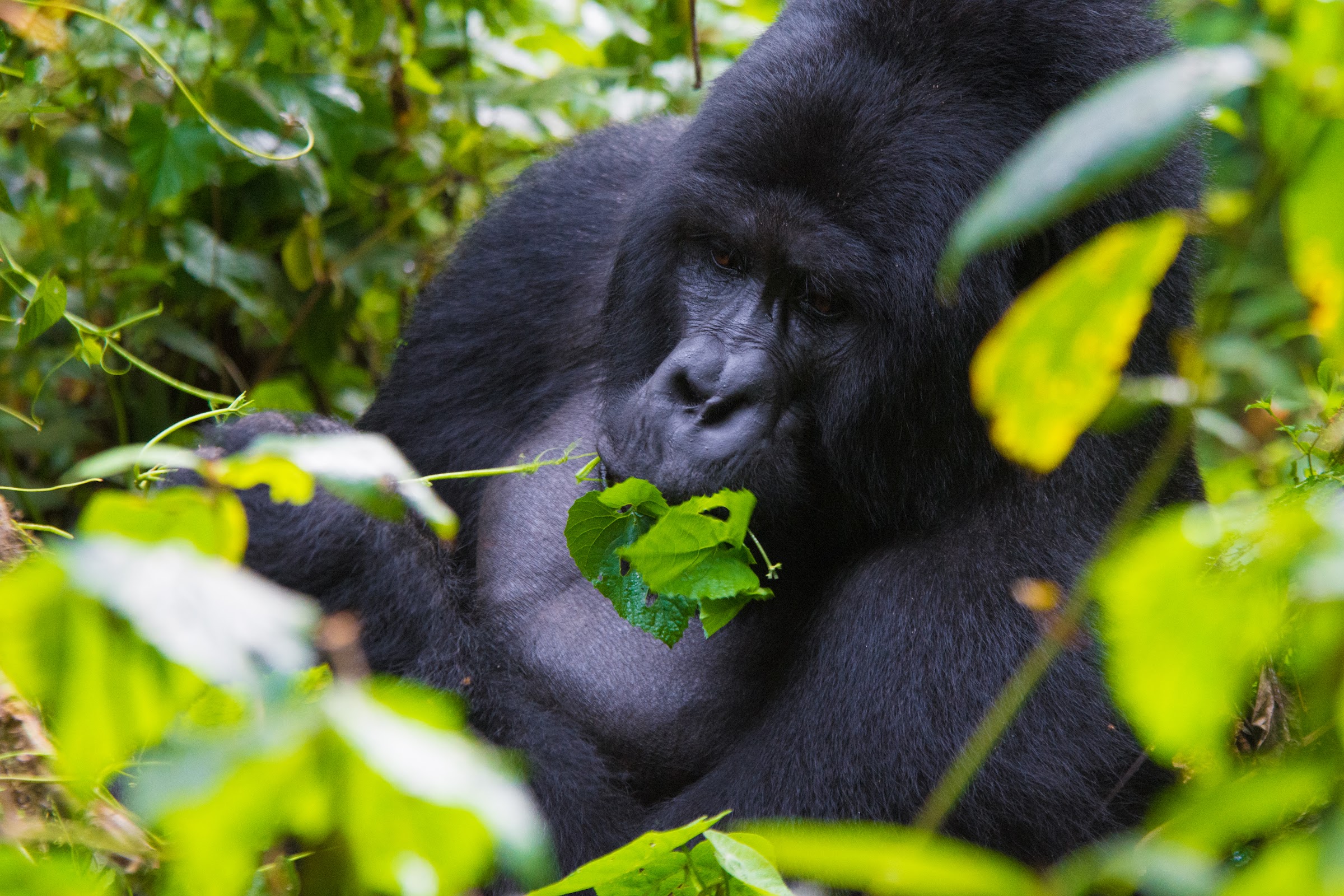
For most travellers, the dream of seeing mountain gorillas in the wild comes with a single, well-known image: a guided trek through misty forest, a breathless hour in the presence of a silverback, and a permit that costs a significant sum. What many don't realise is that Uganda offers a second, deeper option one that trades comfort and certainty for time, intimacy, and a genuine role in the conservation process.
The Gorilla Habituation Experience is not simply a longer trek. It is a fundamentally different encounter, available in only one place on Earth, and priced accordingly. Understanding the contrast between habituation and standard trekking is essential for anyone deciding which experience is right for them.
What Habituation Actually Means
Before comparing the two experiences, it helps to understand what "habituation" is. Wild gorillas are not naturally tolerant of humans. When a family group is first identified, they will flee at the first sign of people, and a silverback may react defensively if approached too quickly. Habituation is the slow, patient process of changing that response not by taming the gorillas, but by demonstrating, day after day, that these particular humans pose no threat .
The process typically takes two to five years of daily visits by a dedicated tracking team . Trackers follow the family from dawn, maintaining a respectful distance and gradually closing the gap as the gorillas grow accustomed to their presence. Soft vocalisations mimicking gorilla contact calls are used, and every movement is calibrated to avoid startling the group. A single careless incident, a sudden noise, a too-rapid approach can undo weeks of progress .
Only once a family is deemed sufficiently calm are they opened for standard gorilla trekking. The habituation experience allows visitors to join the process before that point, spending time with a family that is still learning to tolerate humans.
The Core Differences: Time, Numbers, and Predictability
The most obvious distinction between the two experiences is duration. A standard gorilla trek grants visitors one hour with a fully habituated family once located. The habituation experience extends this to four hours, beginning from the moment the group finds the gorillas .
That four-hour window changes the nature of the encounter entirely. Where a one-hour trek offers a vivid snapshot, the silverback's display, a mother nursing, a juvenile tumbling through the undergrowth four hours allows the full rhythm of gorilla life to unfold. Visitors may witness extended feeding sequences, complex social negotiations, and the quiet intimacy of a family at rest. The pressure to capture the perfect photograph in sixty minutes dissolves, replaced by something closer to observation .
The second key difference is group size. Standard treks permit a maximum of eight visitors per gorilla family per day. Habituation groups are capped at four people . This smaller number is not merely a luxury, it reflects the sensitivity of the process. Fewer humans means less pressure on a family that is still deciding whether to trust.
The third, and most important, difference is predictability. Fully habituated gorillas are calm around humans. They go about their lives with apparent indifference, and sightings are reliably close and stable. Gorillas undergoing habituation are different. They may be nervous. A young silverback might display. A female might move her infant out of sight. The encounter is rawer, less structured, and entirely at the gorillas' discretion . For some travellers, this is precisely the appeal. For others, particularly those on a tight itinerary or hoping for close-up photography, the standard trek may be the wiser choice.
The Price of Access
Cost is where the two experiences diverge most sharply. A standard gorilla trekking permit in Uganda costs $800 for foreign non-residents . The habituation permit is priced at $1,500 nearly double reflecting the extended time, the smaller group size, and the unique nature of the activity .
It is worth noting that Uganda Wildlife Authority tariffs are subject to change. Current reporting indicates that the foreign non-resident habituation rate is scheduled to rise to $1,800 from January 2027, while the standard trekking permit has remained at $800 . Travellers planning ahead should confirm current rates at the time of booking.
The higher price of habituation does not guarantee a "better" experience in any simple sense. It buys time, intimacy, and a closer view of the conservation process. Whether that represents value depends entirely on what the traveller is seeking.
Where and How It Happens
The habituation experience is available only in Uganda, and specifically in the Rushaga sector of Bwindi Impenetrable National Park, in the park's southern region . Standard trekking, by contrast, operates across multiple sectors of Bwindi, Buhoma, Ruhija, Rushaga, and Nkuringo as well as in Mgahinga Gorilla National Park .
A habituation day begins early. Visitors gather at the Rushaga sector headquarters for a briefing around 7:30 AM, where rules and expectations are explained. The group then sets out with rangers, trackers, and researchers, following the trail from where the gorillas built their nests the previous night . The walk to the gorillas can take anywhere from thirty minutes to several hours, depending on how far the family has moved.
Once the gorillas are located, the four-hour clock begins. During this time, visitors may be asked to assist with basic data collection, note-taking, or behavioural observation small contributions to the ongoing research effort. The experience is not passive wildlife viewing; it is participation in a scientific and conservation process, however modest.
Physical Demands and Practical Considerations
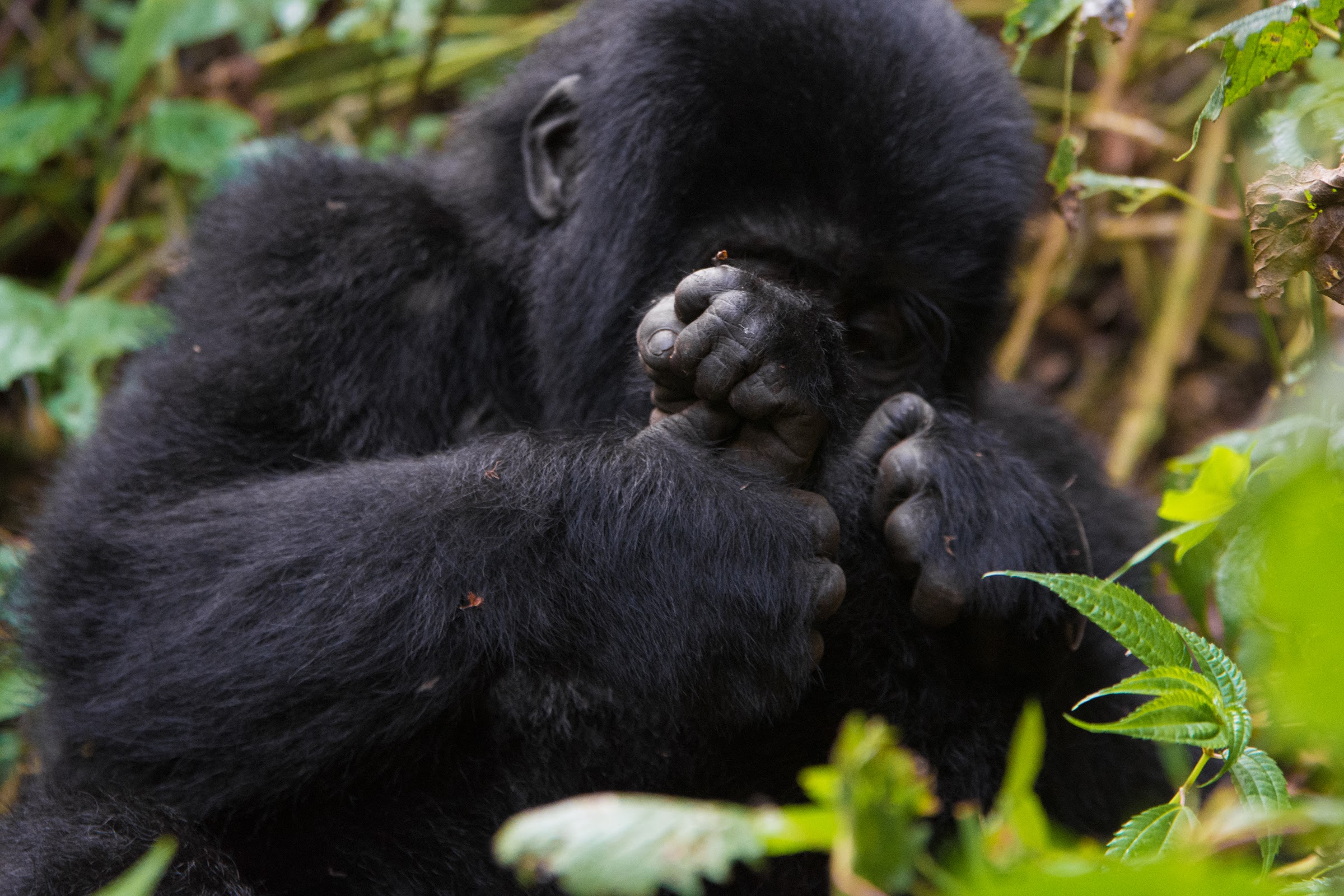
The habituation experience is more physically demanding than standard trekking. The extended duration, combined with the often-remote locations of habituation groups, means visitors should expect a full day in the forest. The terrain in Rushaga is steep, uneven, and frequently muddy. Trails may be overgrown, and stream crossings are common .
A reasonable level of cardiovascular fitness is essential. Visitors should be comfortable walking for several hours on uneven ground and spending extended periods standing or crouching in dense vegetation. Hiking poles are strongly recommended, as are waterproof boots with good ankle support. Porters are available at the trailhead and are well worth engaging they carry daypacks and provide steadying support on difficult sections, while earning income that directly supports local communities.
The minimum age for both experiences is 15 years old, strictly enforced by the Uganda Wildlife Authority. Health rules are equally strict: anyone with a contagious illness even a common cold will be refused participation, as mountain gorillas share approximately 98% of human DNA and are highly vulnerable to human diseases.
Which Experience Is Right for You?
The choice between habituation and standard trekking is not a question of which is "better," but of what kind of traveller you are.
Choose standard gorilla trekking if: you want a reliable, close encounter with a calm family; you have limited time in Uganda; you are travelling on a tighter budget; or you prioritise photography and clear views over extended observation.
Choose the habituation experience if: you have a deep interest in conservation and want to witness the process firsthand; you value time and intimacy over certainty; you are physically fit and prepared for a demanding day; and you are willing to accept that the gorillas may be less cooperative, more hidden, and entirely unpredictable.
Many serious primate enthusiasts do both a standard trek one day, habituation the next to experience the full spectrum of what Bwindi offers. The two are complementary rather than competing.
The Conservation Context
It is easy to frame the habituation experience as a premium tourism product, but its purpose is more fundamental. The fees from both trekking and habituation directly fund park management, ranger salaries, anti-poaching patrols, and community development around Bwindi . The mountain gorilla population, once as low as 300 individuals, now exceeds 1,000 across Uganda, Rwanda, and the DRC a conservation success story that tourism revenue has helped make possible.
The habituation experience also serves a practical function: it brings new gorilla families into the tourism system, gradually expanding the number of groups available for standard trekking and spreading visitor pressure across a wider area. In this sense, every visitor who joins a habituation team is contributing, however indirectly, to the long-term sustainability of gorilla tourism itself.
A Final Word
Uganda's gorilla habituation experience is not for everyone. It is expensive, physically demanding, and offers no guarantees of the calm, close encounters that define standard trekking. But for the right traveller, patient, curious, and willing to trade certainty for depth it offers something rare, four hours in the presence of wild animals who are still deciding, moment by moment, whether to accept you. That is not a wildlife encounter. It is a privilege.
For those planning a Uganda safari, the decision between the two experiences is best made with honest self-assessment and the guidance of a knowledgeable operator. Both paths lead to the same extraordinary forest. They simply ask different things of the traveller who walks it.